




Description
Weinschel Engineering DS-109H Double Stub Tuner 40-400 MHz RF Impedance Matching
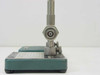
The Weinschel Engineering DS-109H is a coaxial double stub tuner covering 40 to 400 MHz (megacycles). It uses two adjustable short-circuited stubs mounted at fixed spacing along a coaxial transmission line to tune out reactive components and match impedances between a source and load. The front label includes a "Ranges of Easy Matching" chart showing which stub-position combinations (1–4) achieve a match across the frequency range, simplifying setup.
Specifications & What's Included
- Model: DS-109H
- Manufacturer: Weinschel Engineering, Gaithersburg, MD
- Type: Double Stub Tuner (coaxial)
- Frequency range: 40–400 MHz (labeled as 40–400 MC on the unit)
- Number of stubs: 2 adjustable stubs
- Stub positions: 4 selectable positions along the transmission line (labeled 1–4)
- Connector type: Type N coaxial (input and output)
- Stub adjustment: Micrometer-style threaded adjustment with locking hex nut
- Base: Heavy teal cast metal weighted base for bench stability
- Front label: "Ranges of Easy Matching" matching chart — stub positions vs. frequency — present and fully legible
- U.S. Patent No. 2,941,169
- Included: Tuner only — no cables
Applications
Double stub tuners are a fundamental RF and microwave laboratory tool used to match impedances on a coaxial transmission line — canceling reactive mismatch between a signal source and a load (such as an antenna, amplifier, or device under test) to minimize reflections and maximize power transfer. The DS-109H's 40–400 MHz range covers the VHF band and extends into lower UHF, making it well suited to antenna measurements, slotted-line impedance work, amplifier tuning, and general RF lab matching tasks in that range. Weinschel Engineering (founded in the 1950s and based in Gaithersburg, Maryland) was a respected maker of precision coaxial and waveguide RF components and accessories; their stub tuners were standard bench instruments in university, defense, and commercial RF labs from the 1950s through the 1970s. Double stub tuners of this type are still valued today by engineers working with legacy RF test setups, antenna range calibration, and educational transmission-line demonstrations, as well as collectors of vintage precision RF instrumentation.
This Weinschel Engineering DS-109H Double Stub Tuner has been inspected and appears to be in good used condition. The metal transmission line body, stub rods, and locking mechanisms all appear intact with no visible damage. The Type N coaxial connectors show normal wear consistent with lab use. The teal cast base is solid with no cracks. The front label plate with the matching chart is present and fully legible. Normal surface wear and minor scuffing throughout — typical of vintage RF test equipment pulled from an active lab environment. Please view our photo set and contact us if you have any questions.
Warranty Information
Additional Information
Brand: |
Weinschel Engineering |
Model: |
DS-109H |
MPN: |
DS-109H |
Type: |
Double Stub Tuner |
SKU: |
35937 |
Frequency Range: |
40–400 MHz (40–400 MC) |
Number of Stubs: |
2 |
Stub Positions: |
4 (labeled 1–4 along transmission line) |
Connector Type: |
Type N coaxial |
Application: |
RF impedance matching, transmission line tuning |
Patent Number: |
U.S. Patent No. 2,941,169 |
Country/Region of Manufacture: |
United States |
Manufacturer Location: |
Gaithersburg, MD |
Form Factor: |
Benchtop, weighted cast base |
Seller Notes: |
Tuner only — no cables. Two units shown in photos; one unit per listing. |
Condition Notes: |
Weinschel Engineering DS-109H Double Stub Tuner in good used condition. Body, stubs, locking hardware, and Type N connectors intact. Label plate present and legible. Normal surface wear throughout. Please contact us with any questions. |
California Prop 65 Warning: |
WARNING: This product can expose you to chemicals including lead and lead compounds, and DEHP (a phthalate), which are known to the State of California to cause cancer and birth defects or other reproductive harm. Go to P65Warnings.ca.gov |


